

How to Tell Old Woodworm Damage From an Active Infestation
26 October 2026
Share
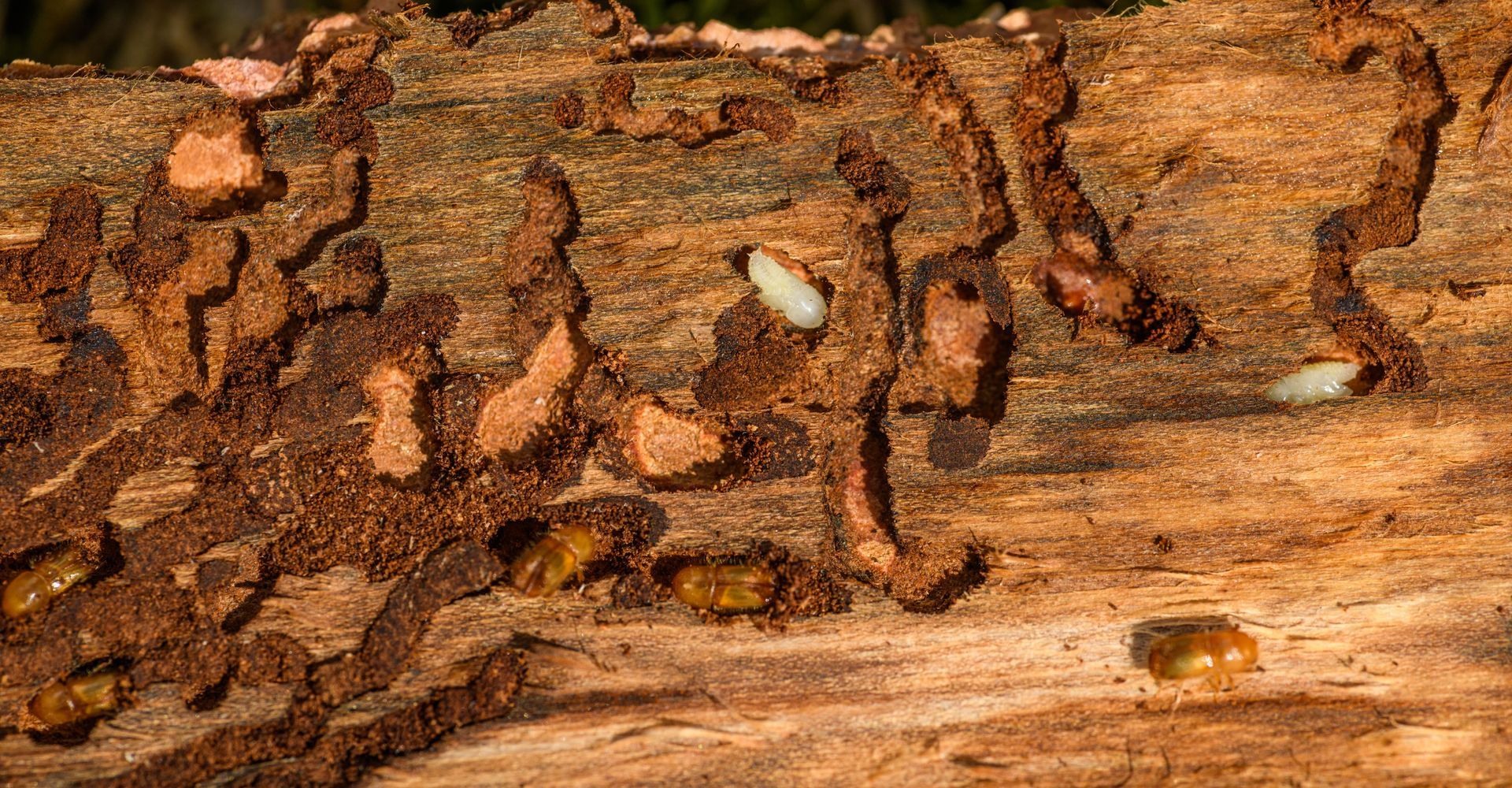
Old Woodworm Damage or Live Beetles in Your Timber
Finding small round holes in a roof timber, a floorboard or the back of a wardrobe does not automatically mean you have a live problem. A lot of the timber in older houses around Waterford and Kilkenny carries old woodworm damage from an infestation that died out years or even decades ago. Other properties have an active woodworm infestation that is still feeding inside the wood and will keep spreading until it is treated.
This article sets out the practical differences between the two: what fresh and old exit holes look like, how to read bore dust, how moisture and heating affect beetle activity, and why late autumn is a useful time to look. Knowing which situation you are dealing with helps you decide whether the timber needs treatment, monitoring or simply a note for the future.
How Woodworm Leaves Its Mark
In Irish homes, the insect behind almost all woodworm damage is the common furniture beetle. The adult beetle lays its eggs in cracks, joints and old exit holes in the timber. The larvae that hatch are the actual "worms", and they tunnel through the wood for several years, usually somewhere in the range of two to five years, feeding on the sapwood.
When a larva is fully grown it pupates just below the surface, and the adult beetle chews its way out, leaving a round exit hole of roughly 1 to 2 mm across. Emergence normally happens between late spring and the end of summer. That cycle matters, because the holes you can see are where beetles have already left. The larvae doing the current damage are hidden inside and give no outward sign until they emerge.
Because of that long life cycle, one look at a timber cannot always settle the question. What it can do is show you which signs point to recent activity and which point to old, finished damage. You can read more about the beetle's life cycle on our guide to woodworm and how it develops.
Signs of Active Woodworm
An active woodworm infestation tends to show several of the following signs together. One sign on its own is worth noting, but a combination is a strong indication that larvae are still working in the timber.
- Clean, sharp-edged exit holes. Fresh holes have crisp edges and the wood inside looks pale and bright, the colour of newly cut timber.
- Fresh bore dust. Fine, gritty, cream-coloured dust, called frass, lying in small piles under holes or spilling from cracks and joints.
- Dust that returns after cleaning. If you hoover an area and new dust appears below the same holes within weeks or months, something is still active.
- Adult beetles. Small brown beetles, around 3 to 5 mm long, found on windowsills or near the timber during late spring and summer.
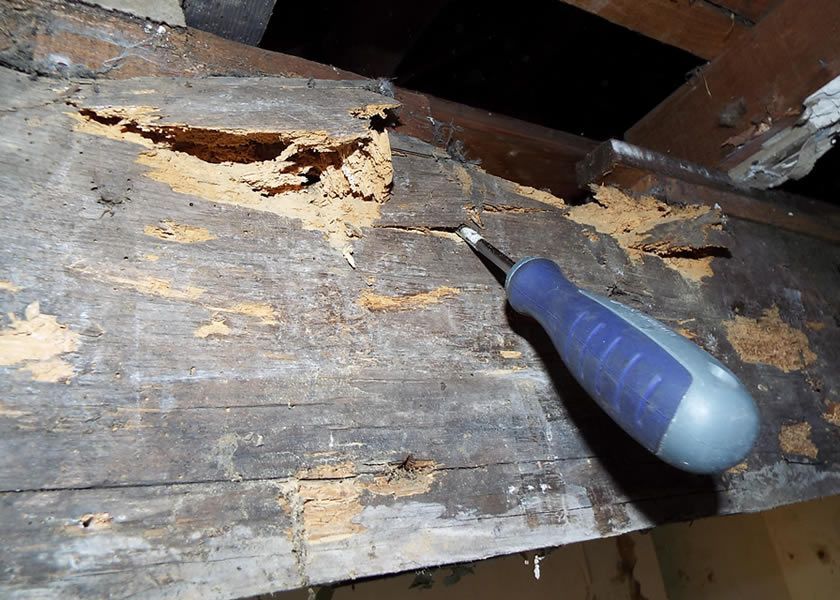
- Soft or crumbling timber. Edges that break away easily when pressed with a screwdriver, showing tunnels packed with dust underneath.
Rub a little of the dust between your fingers. Frass from the common furniture beetle feels gritty rather than powdery, because it is made up of tiny oval pellets. Fresh frass is light in colour and loose. Old frass has usually darkened, compacted and become mixed with ordinary household dust and cobwebs.
What Old Woodworm Damage Looks Like
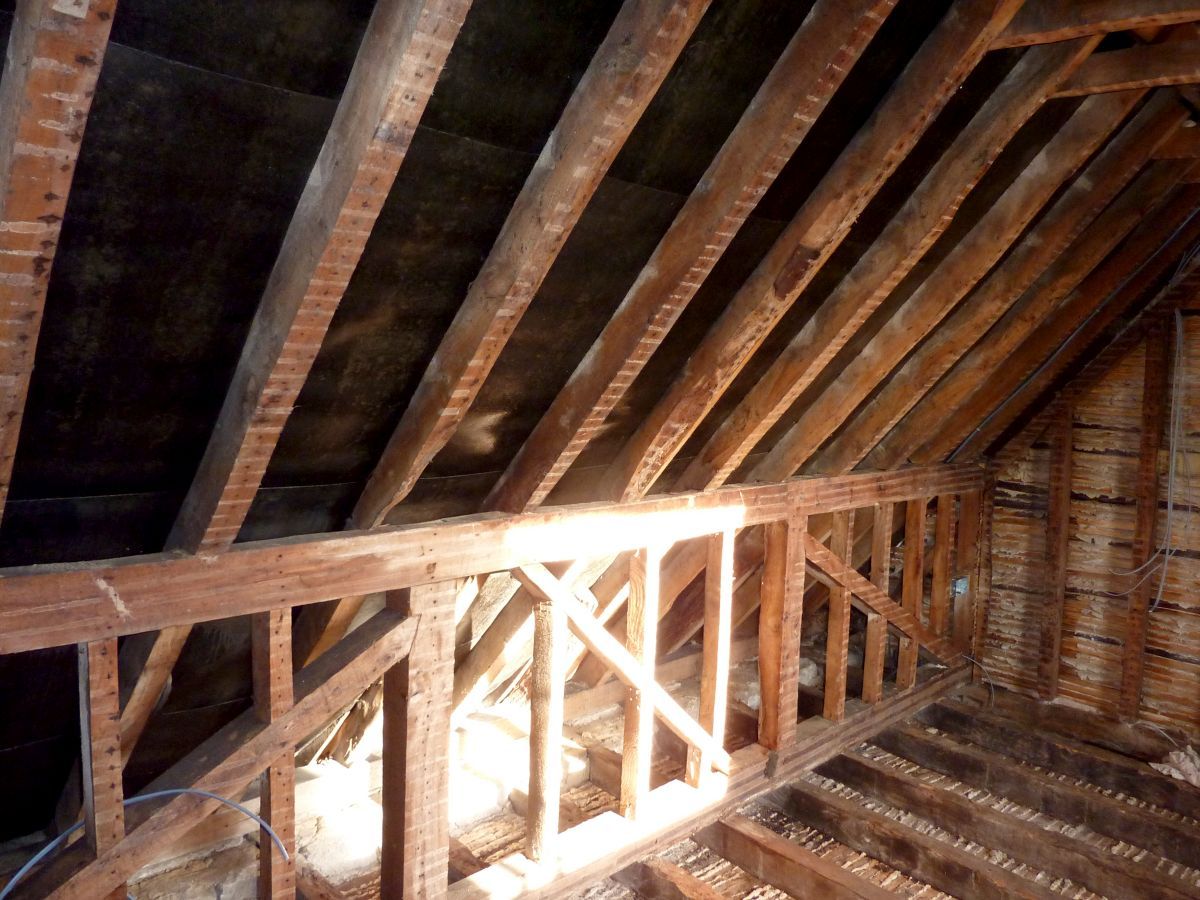
Old woodworm damage is very common in Irish houses built before central heating became standard. Many attics, staircases and suspended timber floors show holes from infestations that stopped long ago, often because the timber dried out once the house was heated and better ventilated.
Holes that have aged
Old exit holes have soft, worn or rounded edges, and the wood inside them has darkened to the same colour as the surrounding surface. On furniture, skirting boards and stairs you will often find paint, varnish or wax that has run into the holes or bridged over them. If a hole has been painted over and the paint film is still unbroken, nothing has emerged through it since the timber was last decorated.
Dust that tells a story
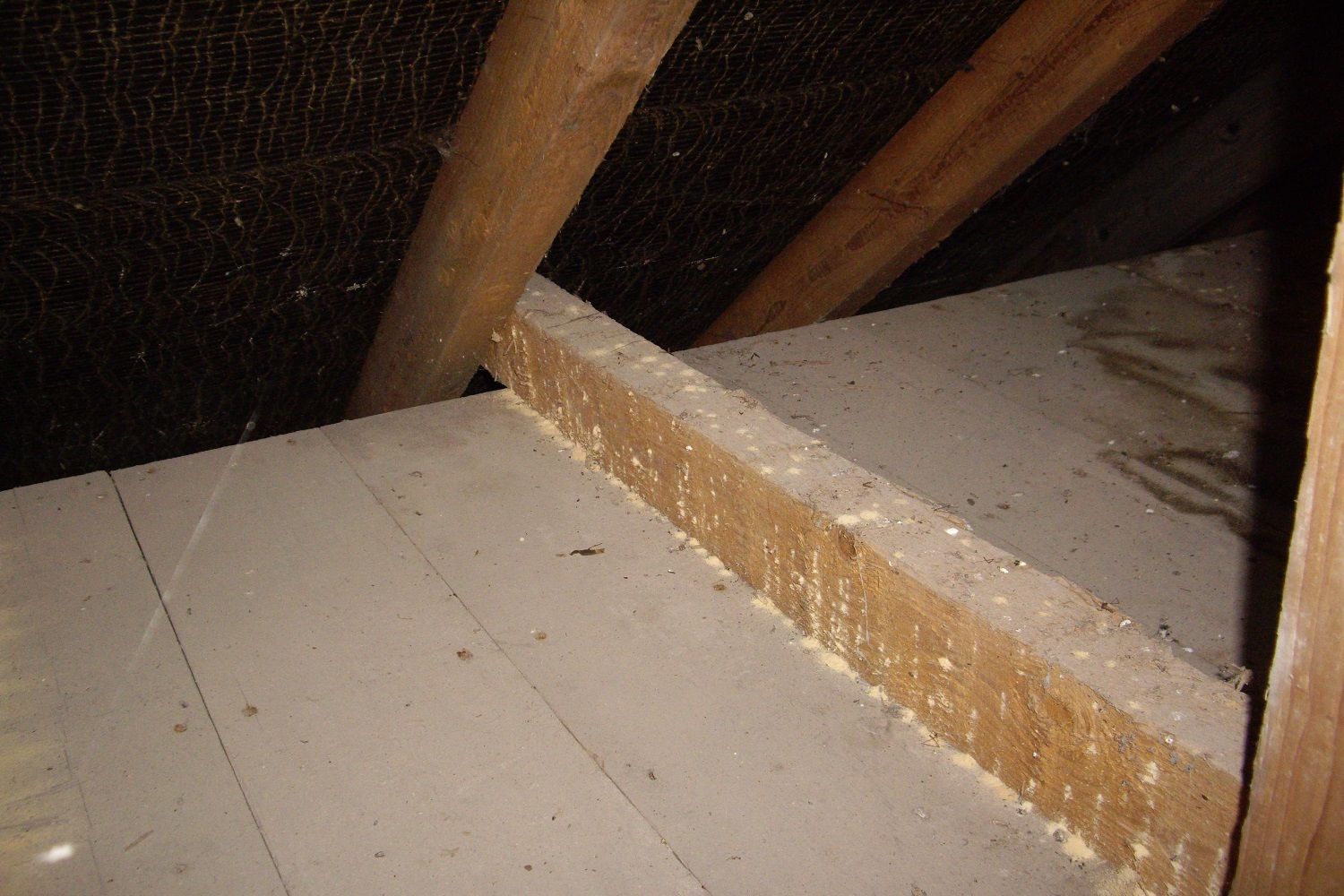
In an attic, look at the dust lying around the base of joists and rafters. Old frass is grey or brown, often bound up with cobwebs and debris, and does not build up further over time. Where the dust layer is undisturbed and there are no pale streaks or new piles, the holes above it are most likely historic.
Even so, old damage still needs to be judged for strength. Heavily tunnelled timber can lose a lot of its load-bearing capacity, so a rafter or joist riddled with holes may need to be assessed whether or not the beetles are still alive.
Why Moisture and Season Matter
The common furniture beetle needs timber with a moderate moisture content to thrive. Dry, centrally heated timber in a well-ventilated house is far less attractive, which is why many infestations die out on their own. The risk comes back where timber stays damp for long periods, and that is common in Irish properties.
- Attics with poor ventilation, condensation on the underside of the roof or a slipped slate letting in rain.
- Suspended floors over a damp sub-floor void with blocked air bricks.
- Timber in contact with damp external walls, such as joist ends and window boards.
- Outbuildings, sheds and converted stables that are rarely heated.
Late October and November are a good time to check. Beetles are not emerging at this time of year, so any fresh-looking dust or bright holes you find are a sign of activity from the summer just gone, not something that will happen in the coming weeks. It is also the point where autumn rain and condensation show up any damp patches on roof timbers or around the eaves, which helps identify the areas most at risk.
Simple Checks You Can Make at Home
You can gather useful evidence yourself before calling anyone out. None of these checks replaces a proper survey, but they help separate old woodworm damage from an active woodworm infestation and give a surveyor a clearer picture.
- Clean and watch. Hoover or brush away all dust from the affected timber and the surface below it, then check again every few weeks. New frass means live larvae.
- Mark the holes. Cover a section of holes with masking tape or a sheet of tissue paper, or dab them with a little furniture wax. Any new hole that breaks through next summer shows that beetles have emerged.
- Photograph a test area. Take clear photos of one area with a coin or ruler for scale. Compare them after the next spring and summer to count new holes.
- Probe gently. Push a screwdriver into suspect timber. Sound wood resists; soft, powdery wood that gives way easily needs closer attention.
- Look for damp. Note any staining, mould, rot or condensation near the holes, as damp timber is far more likely to support an active problem.
If holes appear alongside soft, damp or decayed timber, mention it to your surveyor. Some wood-boring insects are only found in timber that is already rotting, and in that case the damp has to be dealt with as well as the insects.
When to Call in a Professional
A professional woodworm survey is worth arranging if you see fresh frass, bright clean holes, beetles in the house, or damage to structural timbers such as rafters, purlins, joists or stair strings. It is also sensible before buying an older house, before a renovation that will cover timber up again, and before spending money treating timber that may not need it.
A surveyor will examine the affected timbers and the areas around them, check moisture levels, judge whether the infestation is live, and assess whether the damaged wood is still sound. If treatment is needed, you will know exactly which timbers are involved and why. Timber Guard carries out woodworm treatment for homes in Waterford, Kilkenny and surrounding areas, backed by a 25 year guarantee.
Treating timber that only carries old woodworm damage adds nothing, while leaving an active woodworm infestation alone allows it to spread into new timber every year that passes. Getting the diagnosis right first is what keeps the job proportionate.
Getting a Clear Answer
Old woodworm damage shows darkened, worn holes, settled grey dust and often paint or varnish across the surface. Active woodworm shows clean pale holes, fresh gritty frass that keeps returning, beetles in summer and, often, damp timber nearby. Simple checks over a season can help, but a trained eye will usually give you an answer in a single visit. More practical guidance is available on our expert advice page.
If you have found holes or dust in your attic, floors or furniture and want to know whether it is old damage or a live infestation, contact Timber Guard to arrange a woodworm survey. Call 051 552 323 or email info@timberguard.ie.
Recent Posts
If you suspect a woodworm issue in your home, contact TimberGuard today.
Our team is ready to provide you with expert advice and reliable woodworm treatment services to safeguard your property and its wooden components. Don't let woodworms compromise your home's structural integrity; choose TimberGuard for natural, water-based woodworm treatment in Ireland.