

Attic Condensation and Woodworm Risk in Waterford Homes
2 November 2026
Share

How Attic Condensation Raises Woodworm Risk
Attic condensation forms when warm, moist air from the house meets cold roof timbers and felt. In homes across Waterford and Kilkenny, repeated winter condensation keeps rafters and joists damp for months, and damp softwood is far more attractive to the common furniture beetle. Good ventilation and early inspection keep both problems in check.
This article explains why roof spaces get wet in winter, how that moisture links to woodworm, the signs to look for when you go into the attic, and the practical steps that reduce the risk before it turns into structural damage.
Why Roof Spaces Get Wet in Winter
Every household produces moisture through cooking, showers, drying clothes and simply breathing. Some of that warm, humid air rises through the ceiling into the roof space. It escapes through gaps around the attic hatch, recessed lights, pipe and cable openings, and the junctions where ceilings meet walls.
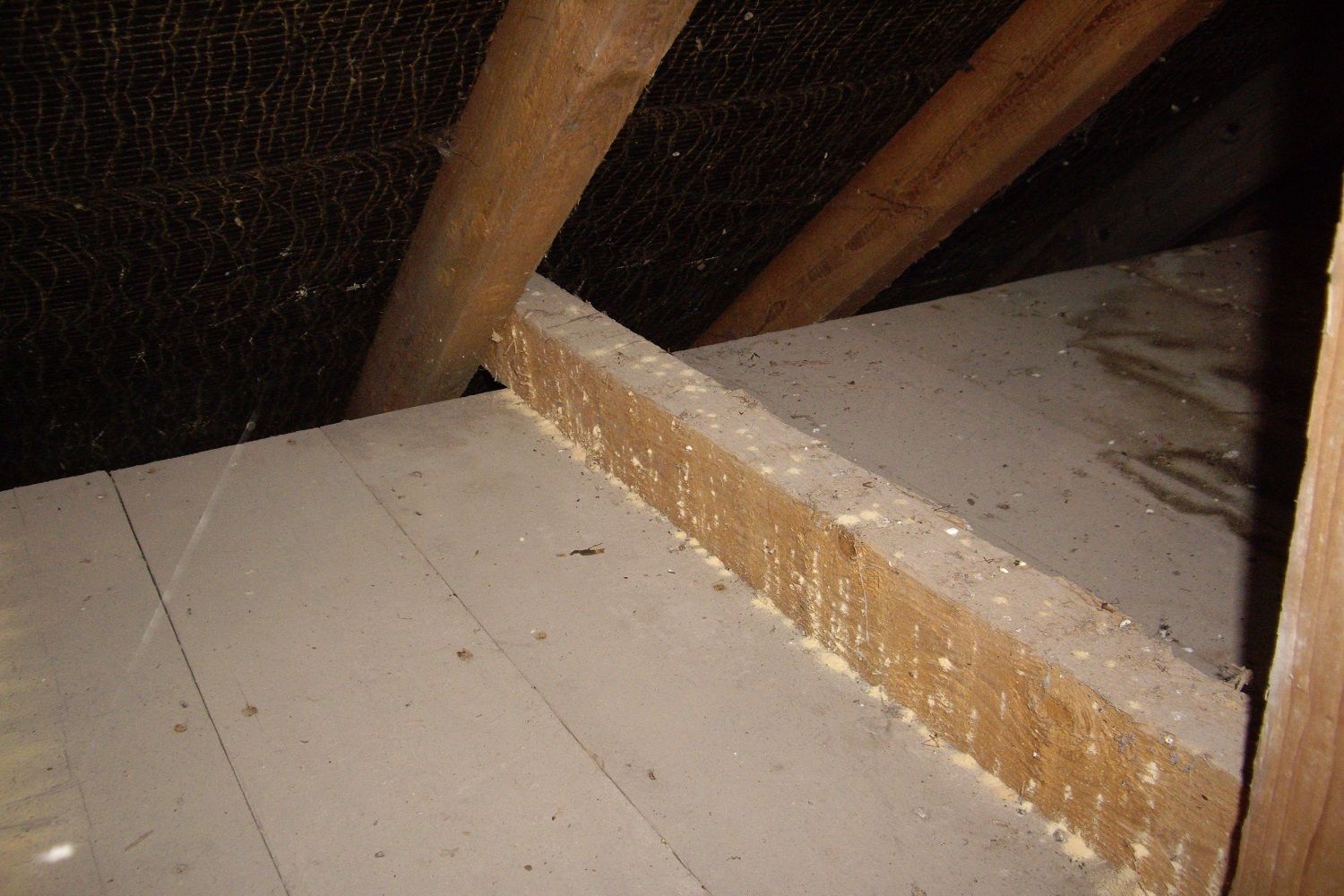
When that air reaches the underside of the roof, it cools quickly. The felt or membrane and the timbers nearest the slates or tiles are the coldest surfaces in the attic, so that is where the water condenses. On clear, frosty nights the effect is strongest, and by morning you can find droplets on the felt, beads of water on nail heads and damp patches on the rafters.
Ireland's mild, humid climate makes this worse. The outside air is often close to saturation from October to March, so it cannot carry much extra moisture away. In coastal parts of County Waterford, around Tramore, Dungarvan and Dunmore East, damp sea air adds to the load.
Condensation in the attic after insulation
Many homeowners first notice condensation in the attic after insulation has been topped up. This is not because insulation is a bad idea. Thicker insulation keeps heat in the rooms below, which is the whole point, but it also means the roof space above is colder than before. A colder attic reaches dew point more easily.
The real problem is usually airflow. Insulation pushed tight into the eaves can block the vents that let outside air sweep through the roof space, and stored boxes or boarding can block it further. The SEAI technical guidance on attic insulation and ventilation notes that long-term condensation in a roof space can rot structural timbers, and stresses that ventilation openings must stay clear after insulation work.

The Link Between Damp Roof Timbers and Woodworm
Most woodworm in Irish homes is caused by the common furniture beetle. The adult beetle lays its eggs in cracks and old exit holes in timber, and the larvae then tunnel through the wood for several years before emerging as adults. You can read more about this life cycle on our guide to woodworm and wood-boring insects.
The larvae feed on the starch and cellulose in sapwood, and they develop far more successfully in timber with a raised moisture content. Dry timber in a warm, well-ventilated house is a poor food source, and larvae in it grow slowly. Damp roof timbers are a different matter. When condensation keeps rafters, purlins and ceiling joists moist through every winter, conditions inside the wood improve for the larvae and an infestation can establish and spread more readily.
Persistent damp also softens timber surfaces and can encourage fungal decay. Wood that has started to decay is easier for larvae to bore into, so condensation, rot and woodworm often appear together in the same part of the roof. That is why we look at moisture and ventilation as part of every woodworm inspection rather than treating the beetle in isolation.
Which parts of the attic are most at risk
- Timber at the eaves , where ventilation is often blocked and the roof is coldest.
- Rafters and battens under the felt , which take the first and heaviest condensation.
- Timber near the attic hatch , where warm air from the landing escapes upwards.
- Joists above bathrooms and kitchens , the rooms that produce the most moisture.
- Areas around a water tank , which may sweat in cold weather or leak slowly.
Signs of Attic Condensation and Woodworm to Check
Early November is a good time to look, because the first cold spells show where condensation collects. Take a good torch, wear a mask if the space is dusty, and only walk on boarded areas or joists. Look for the following.
- Water droplets or a damp sheen on the underside of the felt, especially on cold mornings.
- Dark staining, tide marks or black mould on rafters, sarking boards or the backs of stored items.
- Rusty nails, damp insulation or a musty smell when you open the hatch.
- Small round exit holes in timber, roughly 1 to 2 mm across, typical of the common furniture beetle.
- Fine, pale, gritty dust known as frass below or around those holes.
- Timber that feels soft or crumbles when you press a screwdriver lightly into the surface.
Holes on their own do not always mean the woodworm is still active, as many older Waterford homes carry historic damage. Our article on telling old woodworm damage from an active infestation explains how to judge this. If you find fresh frass, clean-edged holes and damp timber in the same area, arrange a professional look before the next emergence season in late spring and summer.

Improving Attic Ventilation and Cutting Moisture
Reducing attic condensation is mostly about two things: letting less moist air into the roof space and letting more outside air flow through it. Most of the steps below are simple, and they protect the roof whether or not woodworm is present.
- Pull insulation back from the eaves so that air can enter freely, or fit eaves trays or ventilation tiles where the eaves cannot be cleared.
- Draughtproof and insulate the attic hatch so warm air from the landing does not rise straight into the roof.
- Seal gaps around pipes, cables and light fittings that pass through the ceiling.
- Make sure bathroom and kitchen extractor fans duct to the outside, not into the attic.
- Keep stored boxes away from the eaves and off the insulation so airflow is not blocked.
- Check the water tank and pipework for slow leaks and lag any pipes that sweat.
- Ventilate the house itself by using extractor fans, keeping trickle vents open and avoiding drying clothes indoors where possible.
Where condensation is heavy or the roof has no clear route for air, a roofer may need to add high-level vents near the ridge or tile vents in the roof slope. If your home has had recent insulation work and the attic is now wetter than before, raise it with the installer, because ventilation should form part of that work.
When Attic Condensation Needs a Woodworm Survey
Fixing the moisture source is always the first step, but it does not remove larvae already living in the timber. If you have found exit holes, fresh dust or soft wood in a damp roof space, the timbers should be surveyed to confirm whether the infestation is active, how far it has spread and whether any timber has lost strength.
During a survey we inspect the roof structure, check the condition of rafters, joists and purlins, note where condensation and damp are affecting the timber, and identify the insect responsible. You can read more about what this involves in our post on woodworm survey and inspection. Where treatment is needed, our woodworm treatment service deals with the infestation in the affected timbers, and we will point out any ventilation issues so the roof stays drier afterwards.
Acting early matters. Woodworm damage builds up slowly over years, and a roof that is dealt with while the infestation is small usually needs far less work than one left until timbers are badly weakened.
Keeping Your Roof Space Dry and Sound
Attic condensation is common in Irish homes, especially after insulation upgrades, and it is a warning sign worth taking seriously. Damp roof timbers give woodworm the conditions it needs, so a simple check each winter, clear eaves ventilation and a well-sealed hatch go a long way. For homeowners in Waterford, Kilkenny and the surrounding areas, a professional inspection gives peace of mind that the roof structure is sound.
If you have noticed condensation, exit holes or bore dust in your attic, contact Timber Guard to book a woodworm inspection. Call us on 051552323 or email info@timberguard.ie and we will arrange a visit at a time that suits you.
Recent Posts


If you suspect a woodworm issue in your home, contact TimberGuard today.
Our team is ready to provide you with expert advice and reliable woodworm treatment services to safeguard your property and its wooden components. Don't let woodworms compromise your home's structural integrity; choose TimberGuard for natural, water-based woodworm treatment in Ireland.