
Checking Roof Timbers for Woodworm Before Buying a House
16 November 2026
Share
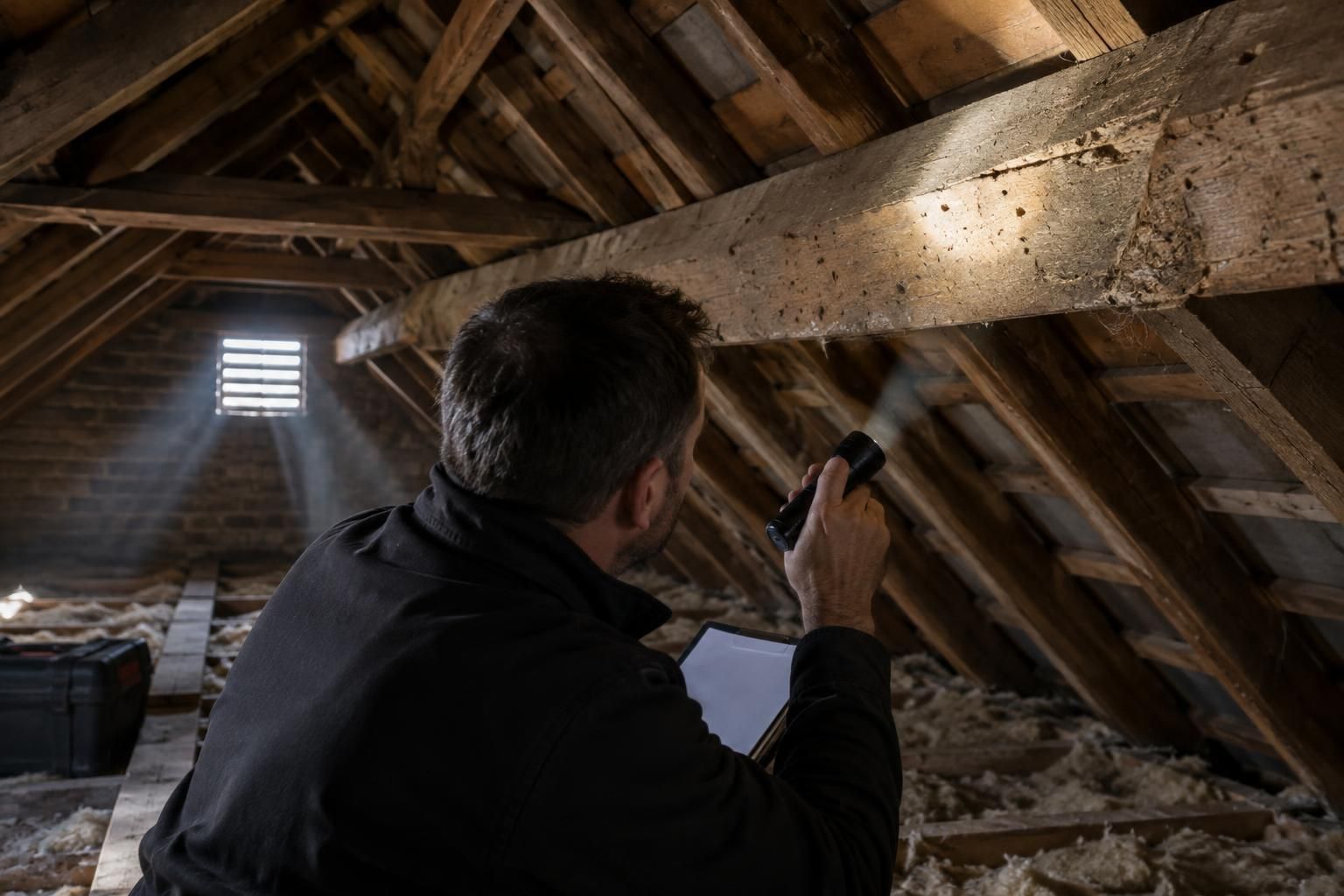
Checking Roof Timbers For Woodworm Starts In The Attic
Checking roof timbers for woodworm before buying a house means having the attic inspected for exit holes, bore dust and damp before you sign contracts, so you know the true condition of the rafters, purlins and joists you are about to take on.
It is one of the few checks that can be arranged quickly, at relatively low cost, and still change the outcome of a sale. In this article we look at what a timber inspection in the roof space actually covers, the signs a surveyor or buyer should look out for, why older homes in Waterford and Kilkenny are more exposed than most, and what to do if woodworm turns up before you complete the purchase.
What A Pre-Purchase Timber Survey Looks For In The Roof Space
A pre-purchase timber survey focuses on the structural timbers that hold the roof together, because these are the timbers most likely to carry an infestation and the most expensive to put right if they fail. Anyone arranging our woodworm treatment service before completing a purchase will usually start with this kind of attic check rather than a general look around the house.
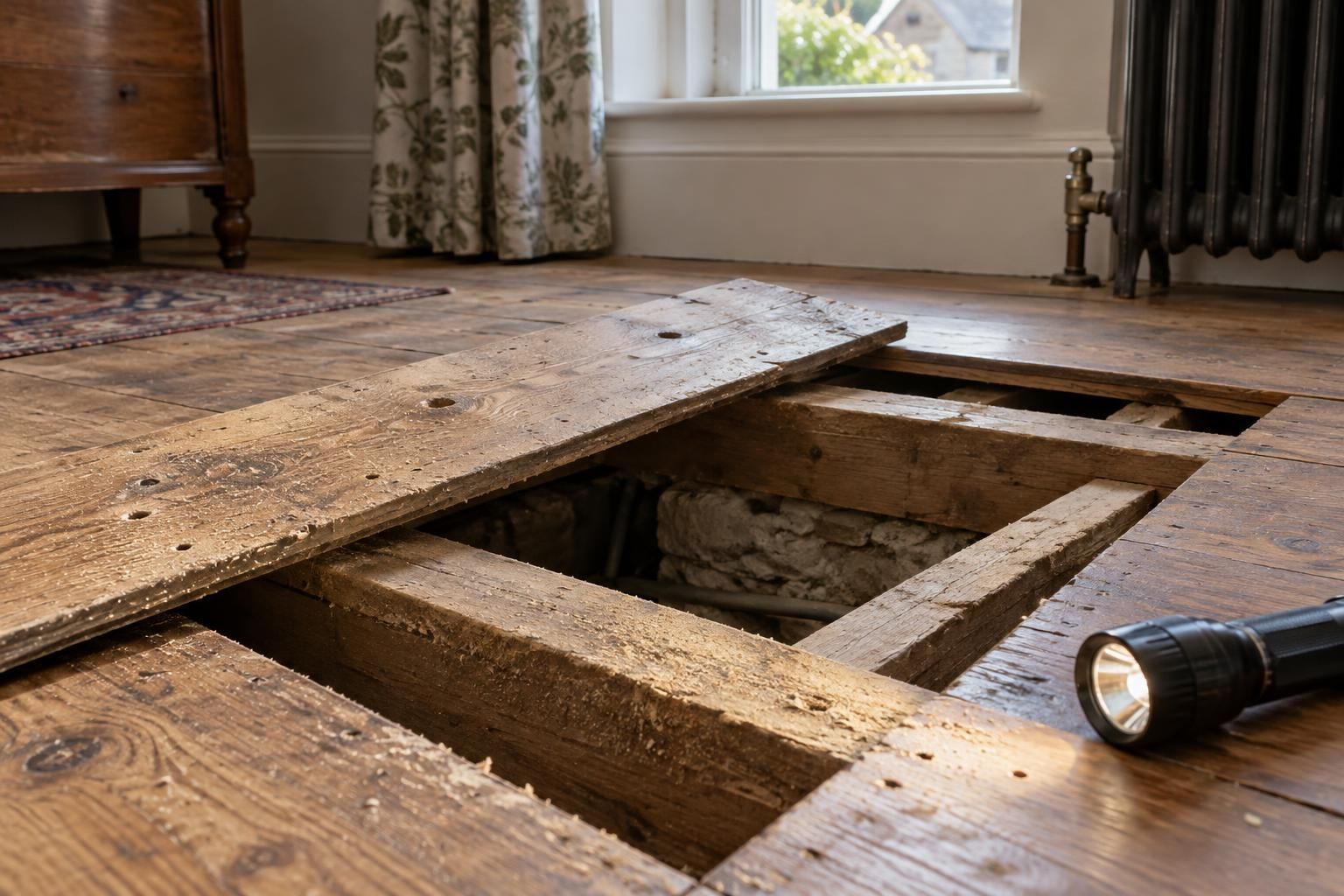
During the inspection, we go up into the loft with a torch and look closely at the rafters, purlins, ceiling joists and, where accessible, the floor joists below the attic. We are checking for:
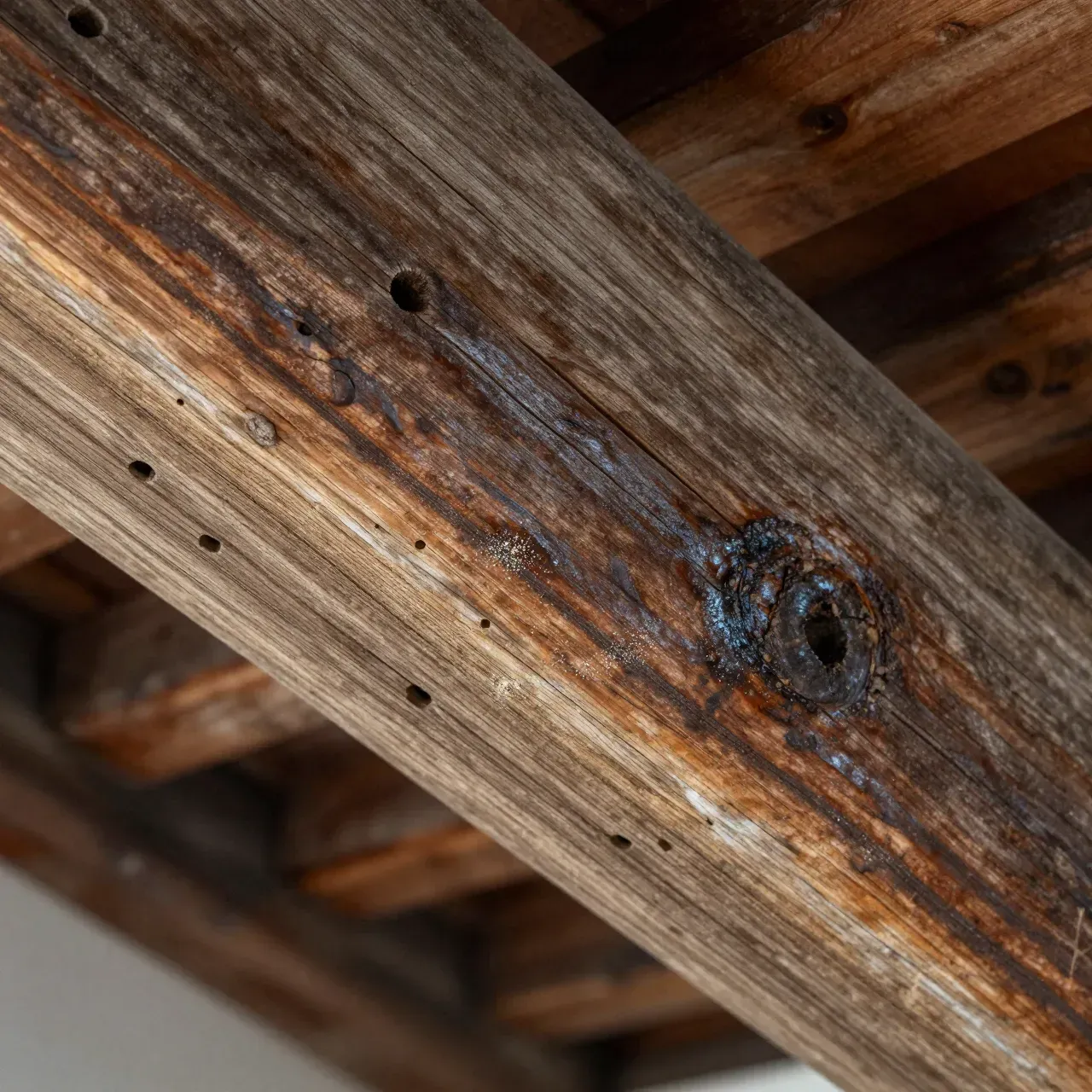
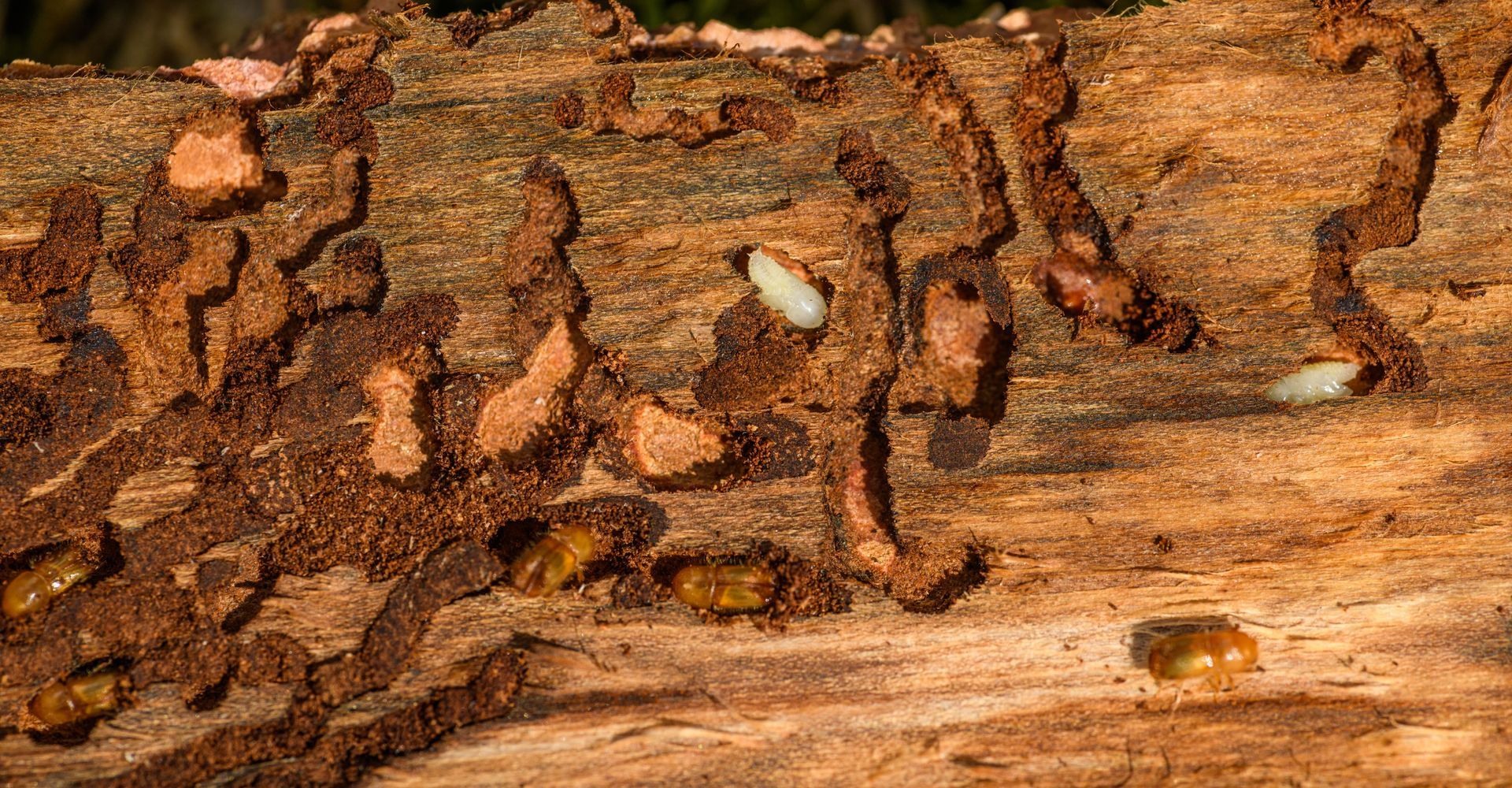
- Small round or oval exit holes on the surface of the timber
- Fine, powdery bore dust (frass) on joists, insulation or stored items below
- Soft, crumbling or spongy timber when gently probed
- Damp patches, staining or condensation around the roof timbers
- Any previous treatment marks, such as old spray staining or past repair work
The aim is not just to spot woodworm, but to judge how serious it is, whether it is still active, and whether the timbers are strong enough to be treated and retained rather than replaced.
Common Signs Of Woodworm In Roof Timbers And Joists
Most homeowners never go into the attic unless they are storing boxes, which is exactly why woodworm in roof timbers can go unnoticed for years. Before buying a house, it is worth asking the seller or estate agent for access to the loft so these signs can be checked properly rather than guessed at from the landing hatch.
Signs of woodworm in roof timbers are not always obvious at first glance, especially in a poorly lit attic. Look out for:
- Clusters of pinhole-sized exit holes, often on the underside or edges of rafters and joists
- Bore dust that looks fresh, pale and powdery rather than old and discoloured
- Timber that feels unusually light or sounds hollow when tapped
- Sagging or visibly weakened sections of roof structure
- Dead beetles near roof lights, water tanks or insulation
Fresh, pale frass usually points to recent or ongoing activity, while old, discoloured holes with no dust nearby often mean the infestation is historic. Our post on how to check for active woodworm goes through this distinction in more detail and is worth reading alongside any survey findings.
Why A Visual Check Alone Is Not Always Enough
A buyer walking through a loft with a torch can spot obvious damage, but judging how deep an infestation goes, or how much strength a joist has lost, takes training and experience. That is why a proper pre-purchase check should always involve a qualified surveyor rather than a quick look during a single viewing.
Why Irish Roof Spaces Are Prone To Woodworm
Ireland's damp climate, combined with a large stock of older housing, makes roof spaces more vulnerable to wood-boring insects than many buyers expect. Poor ventilation in older attics traps moisture, and that moisture is exactly what woodworm and the fungal decay that often travels with it need to establish themselves in rafters and joists.
This is especially relevant across Waterford, Kilkenny and the surrounding areas we work in, where a good number of the properties on the market are period or mid-century homes with original roof timbers that have never been treated or even inspected. A house that looks well kept from the outside can still have decades-old, untreated timber sitting quietly above the ceiling. Extensions and renovations can also disturb old timber or change airflow in the loft without anyone realising, which is another reason a dedicated check matters even on a house that has had recent work done. Our guide to woodworm infestations explains more about how these insects get into timber and why older properties carry more risk.
Buyers moving from newer estates into older rural or town properties around the south east are often the most surprised by this, simply because they have never had reason to look closely at a roof space before. A short visit to the attic before you buy removes that uncertainty.
What Happens If The Survey Finds Woodworm
Finding woodworm during a pre-purchase inspection is not automatically a reason to walk away from a sale. Many cases are old, inactive infestations that caused damage years ago and have since stopped, while others are active but limited to a small, treatable area. What matters is getting a clear, specific answer rather than a vague mention in a general building report.
The Competition and Consumer Protection Commission's guidance for home buyers recommends arranging a proper structural survey before you commit to a purchase, precisely because a general valuation is not designed to catch issues like this. You can read more about why that step matters on the CCPC's home movers guide.
Once woodworm has been confirmed, the next questions are usually how much timber is affected, whether it is still active, and what it would cost to treat. A specific attic inspection answers all three, and gives you something concrete to bring back to the seller or your solicitor if you need to renegotiate. In our experience, buyers who go into a sale with a clear treatment estimate in hand tend to find the whole process far less stressful than those who are left guessing at the scale of the problem.
Steps To Take Before You Complete The Purchase
If a general survey flags "evidence of woodworm" without much detail, or if you simply want certainty before signing, it helps to follow a clear sequence rather than leaving it to chance.
- Ask for direct access to the attic during a viewing, not just a glance through the hatch.
- Arrange a dedicated timber inspection focused on the roof structure, separate from the general building survey if needed.
- Get a written report that states whether any infestation found is active or historic.
- Ask for a cost estimate for treatment if woodworm is confirmed, so it can be weighed against the purchase price.
- Keep a copy of the report for your records, even if no treatment is needed straight away.
Following these steps before contracts are signed means there are no surprises once you move in, and no arguments later about who should have known what.
Checking Roof Timbers For Woodworm Gives You Certainty Before You Buy
Checking roof timbers for woodworm before buying a house is a small step that can save a buyer a great deal of stress and expense further down the line, particularly on older properties across Waterford and Kilkenny where original roof timbers are common. A clear, specific attic inspection turns a vague worry into a known cost, and lets you make an informed decision rather than an uneasy guess. It also gives you a baseline record of the roof timbers' condition on the day you bought, which is useful to have on file even years later.
If you are buying a house and want the roof timbers checked properly before you commit, get in touch with our team to arrange an inspection. You can reach us on 051 552323 or by email at info@timberguard.ie, and we will talk you through what we find in plain terms.
Recent Posts
If you suspect a woodworm issue in your home, contact TimberGuard today.
Our team is ready to provide you with expert advice and reliable woodworm treatment services to safeguard your property and its wooden components. Don't let woodworms compromise your home's structural integrity; choose TimberGuard for natural, water-based woodworm treatment in Ireland.