

How Often Roof Timbers Should Be Checked For Woodworm
23 November 2026
Share
Deciding How Often Roof Timbers Should Be Checked for Woodworm
As a rule, how often roof timbers should be checked for woodworm means a visual look in the attic once or twice a year and a professional survey every few years, or straight away if you see fresh holes or dust. Older homes in Waterford and Kilkenny benefit from the shorter interval.
This guide explains what a regular attic check involves, why the time of year matters, which homes need closer attention and when to call a specialist rather than carrying on alone.
Why Regular Roof Timber Checks Matter
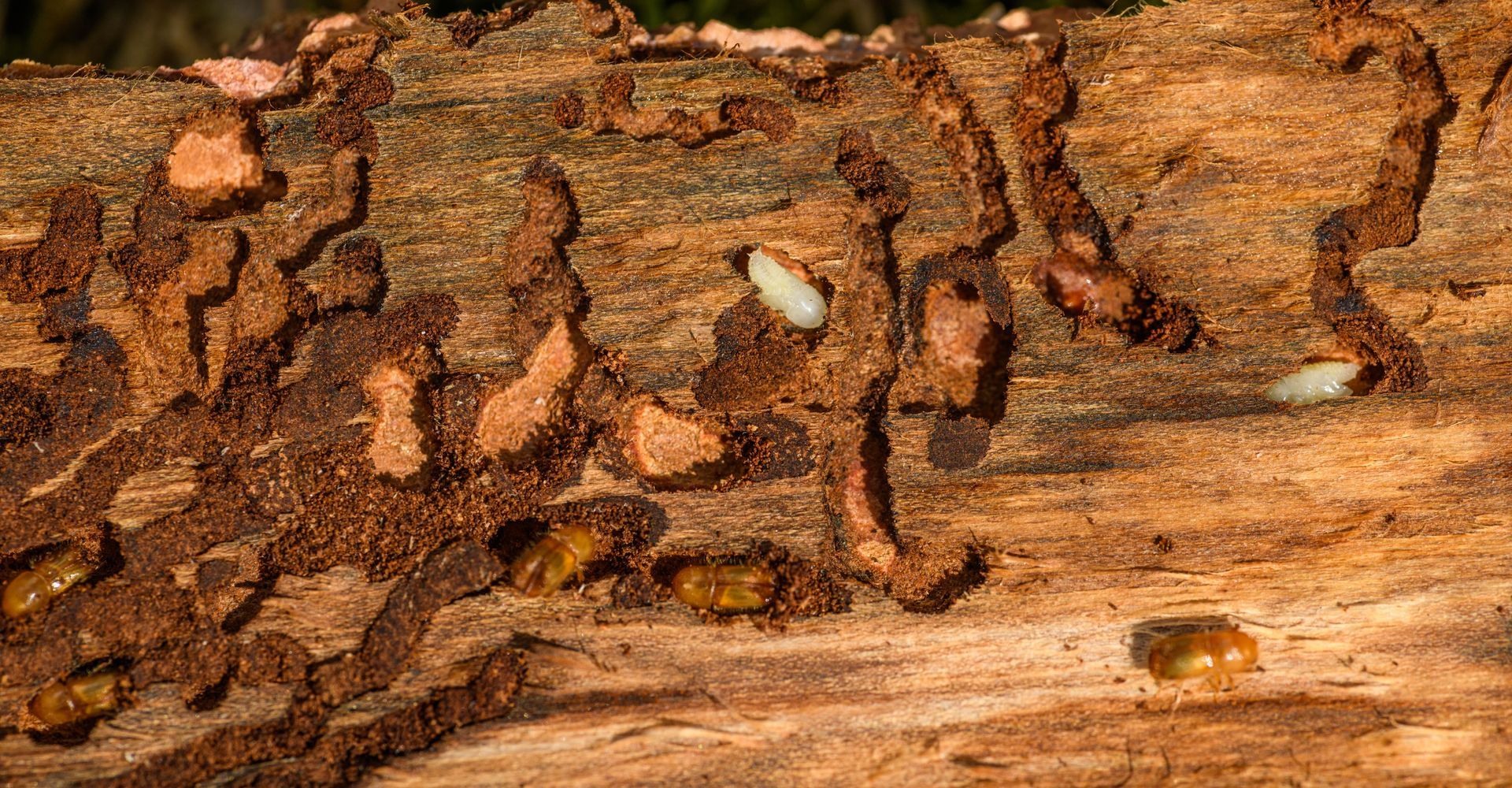
Woodworm is the common name for the larvae of wood-boring beetles. They spend most of their life inside the timber, feeding quietly for years, and only show themselves when the adult beetle chews its way out and leaves a small round exit hole. By the time most people notice a problem, the larvae may have been tunnelling through rafters, purlins or ceiling joists for several seasons.
Roof timbers carry the weight of the roof, so damage there is more serious than a few holes in a loose piece of wood. Because the attic is rarely visited, a problem can build up unseen. A short, regular look costs nothing and catches trouble while it is still cheap to deal with. Our guide to woodworm and how infestations develop explains the life cycle in more detail.
A Sensible Schedule for Attic Inspections
A Quick Look Once or Twice a Year
For most houses in Waterford, Kilkenny and the surrounding areas, a homeowner check twice a year is a reasonable habit. Late spring or early summer is useful because adult beetles are most active then, and late autumn is a good time to see how the roof space has coped with the wetter months. If you can only manage one check, choose the early summer visit.
A Professional Survey Every Few Years
A trained surveyor will spot things a quick look misses, such as old damage that has been painted over, damp patches behind insulation or beetle species that need a different approach. Having the roof timbers surveyed every three to five years is a sensible interval for an older home. Where there is no history of woodworm and the roof space is dry and well ventilated, the longer end of that range is usually enough.
When to Check Straight Away
Do not wait for the next scheduled visit if any of these happen:
- You find fresh, pale exit holes or a fine powder beneath the timbers.
- The roof has leaked or the attic has felt damp or smelled musty.
- Insulation or storage has been added and the timbers can no longer be seen.
- You are buying or selling a property with an older roof.
What to Look For in the Attic
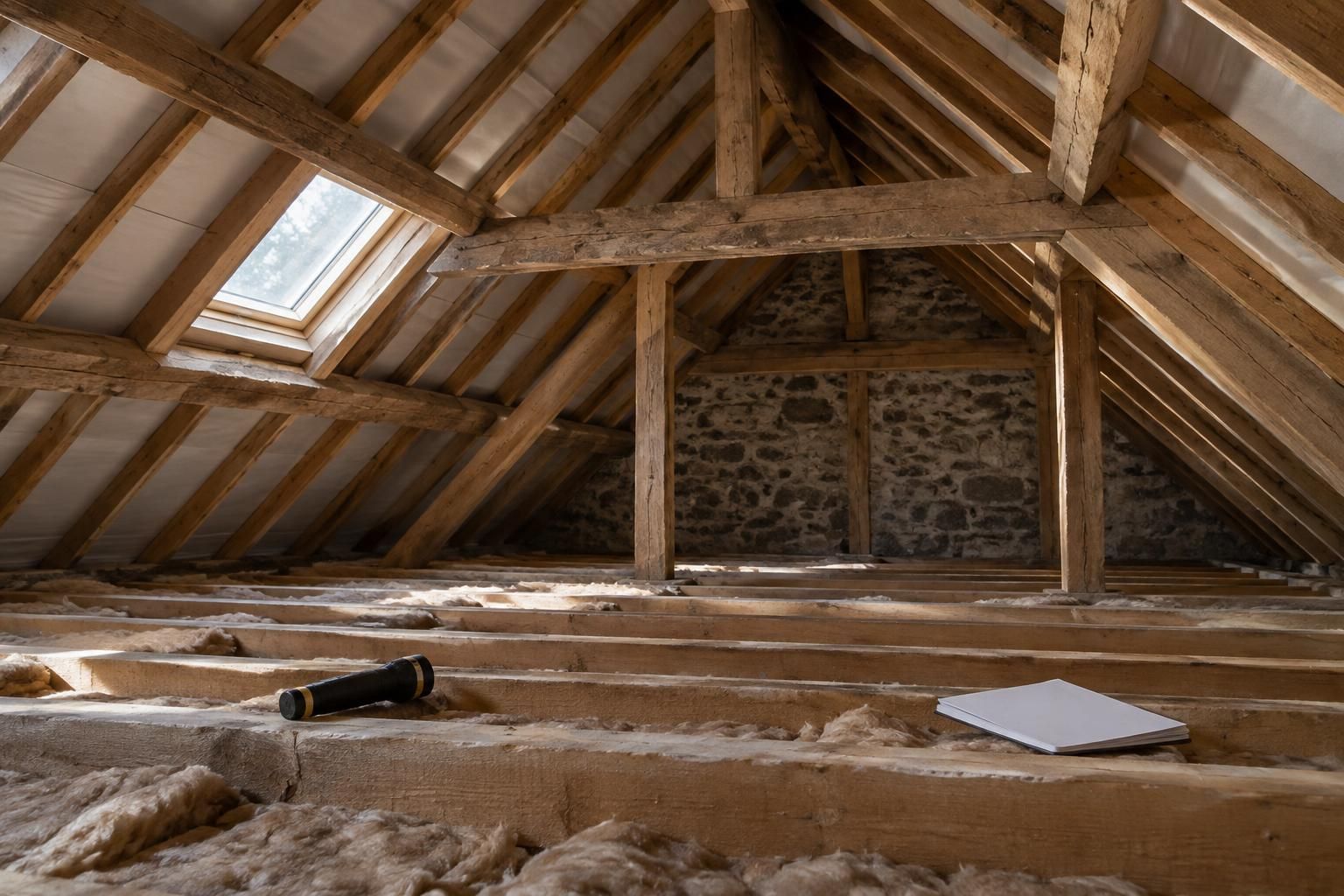
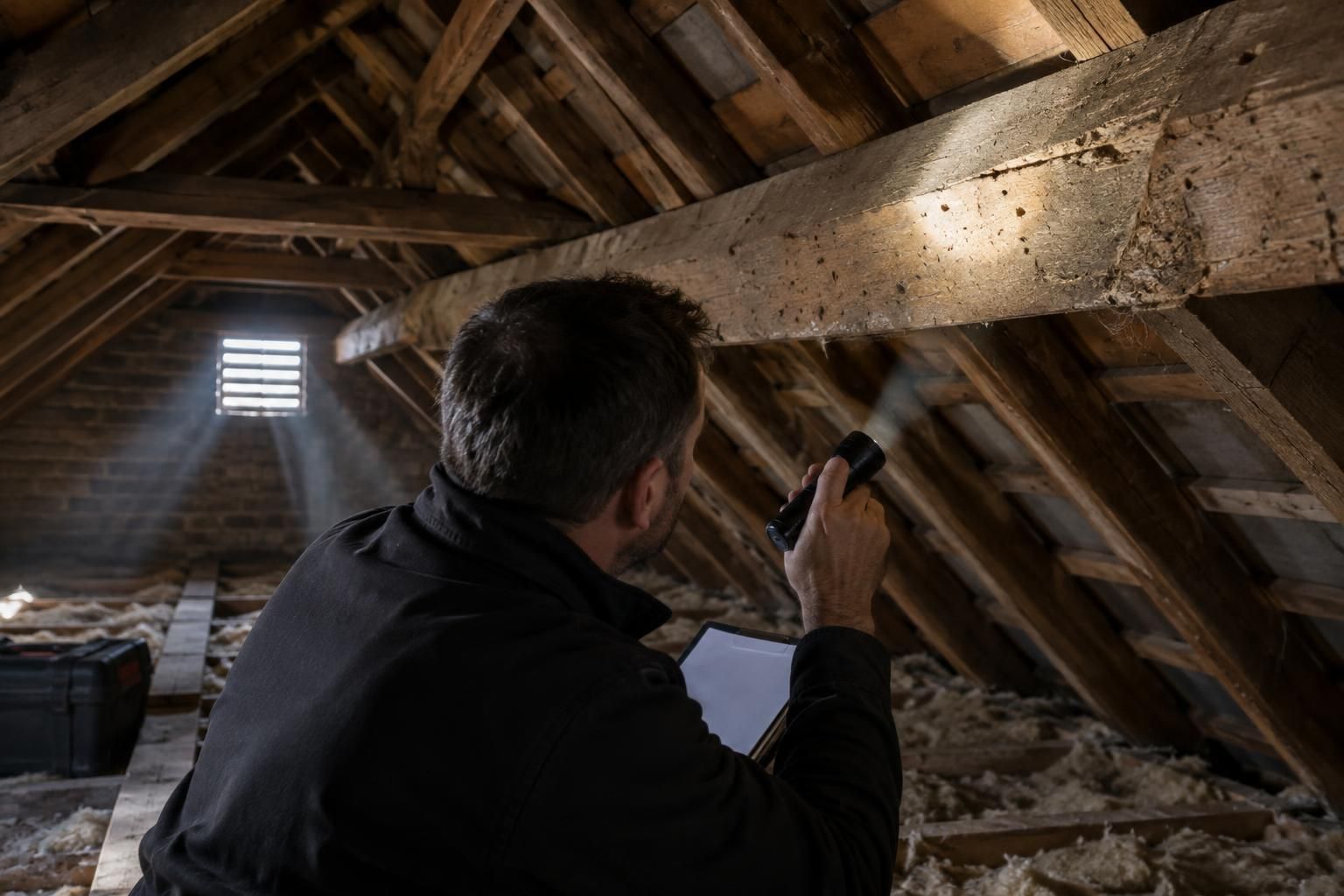
You do not need special equipment. A good torch, a pair of gloves and a few minutes of patience will do. Stay on the joists or a safe boarded area and never step on the ceiling plasterboard below. Work along the rafters, purlins, ceiling joists and wall plates, looking at both the surface and the junctions where timbers meet.
Exit Holes and Frass
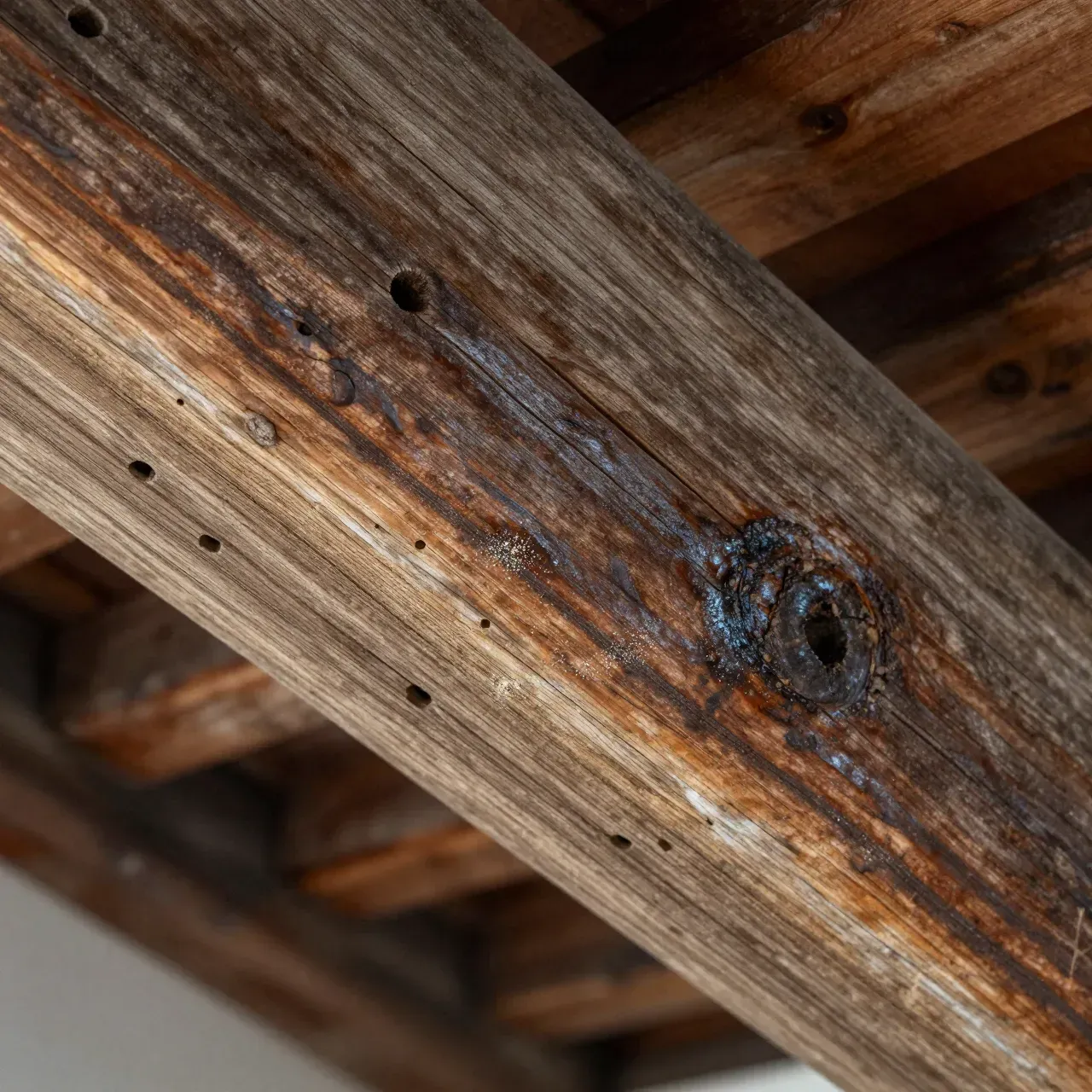
Exit holes are small, round and usually between one and two millimetres across, depending on the beetle. Fresh holes look clean and pale inside. Frass is the fine dust the larvae push out as they tunnel, and it often collects in small piles on the timber below or on the insulation. Tapping a suspect spot lightly with a screwdriver can show whether the surface is hollow.
Damp, Staining and Soft Timber
Woodworm tends to favour timber that has been damp at some stage. Dark staining, a musty smell or soft, crumbling wood point to a moisture problem that should be fixed alongside any treatment. Our article on how to check for active woodworm covers the signs in more detail.
Old Damage or Active Infestation
Holes alone do not prove the problem is current. Old damage can sit in a roof for decades without any activity. A specialist can tell the difference by looking at the age of the holes, the dust and the condition of the surrounding wood.
What a Professional Roof Timber Survey Involves
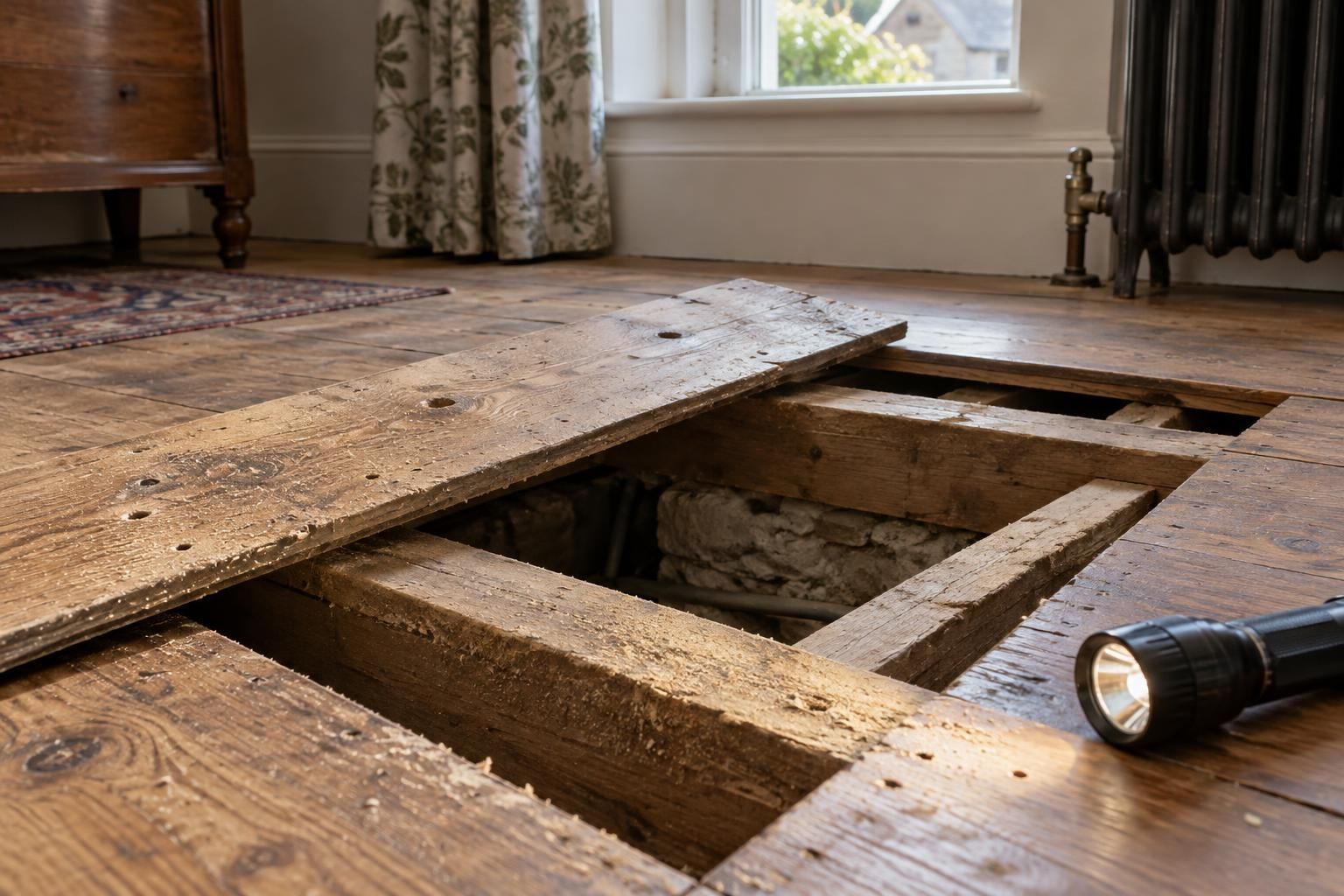
A survey begins with the roof space itself. The surveyor looks over every accessible timber, noting the type of wood, the size and spread of any exit holes, the presence of frass and the moisture condition of the surrounding area. They will also check the places a homeowner cannot easily reach, such as the ends of rafters where they meet the wall plate and the timbers under insulation.
The result should be a clear explanation of what is present, whether it is active, and what, if anything, needs to be done. In many cases the answer is that the timbers are sound and no treatment is required, which gives you a dated record to compare against at the next check. That record is also useful when you sell the house, because a buyer can see the roof has been looked after.
Which Homes Need Closer Attention
Some roofs deserve a shorter inspection cycle than the general guidance suggests. These include older Irish houses with original softwood roof timbers, homes where a previous infestation was treated, and roofs with poor ventilation where warm, damp air collects at the ridge. Extensions and attic conversions can also trap moisture if the roof space is closed in without enough airflow.
If you recently bought a property, it is worth a closer look in the first few months, even if a survey was done at the time. Our article on checking roof timbers for woodworm before buying a house explains what a pre-purchase look should cover.
Keeping Roof Timbers Dry and Healthy
Regular checks work best alongside good habits that make the roof space less attractive to beetles. Dry timber is far less likely to be attacked, so the best prevention is controlling moisture.
- Keep roof ventilation clear and never block eaves vents with insulation.
- Repair slipped slates, failed flashings and leaking gutters promptly.
- Leave a clear gap around timbers when adding insulation so you can still inspect them.
- Avoid storing damp cardboard or fabric directly against rafters.
- Record the date and findings of each check so changes are easy to spot.
When to Call a Specialist
If you find signs of active woodworm, structural softness or widespread holes, arrange a professional inspection. A specialist will identify the beetle, judge how far the damage has spread and recommend whether treatment is needed. Where treatment is the right answer, we explain the options on our woodworm treatment page. Treating the wrong problem, or leaving a real infestation to spread, can end up costing considerably more.
We only deal with woodworm in structural timbers, which means roof timbers and joists, and in most cases the attic is where the work happens.
Summary on Checking Roof Timbers for Woodworm
To sum up, how often roof timbers should be checked for woodworm depends on the age and condition of the house, but a twice-yearly look and a survey every few years suit most homes in Waterford and Kilkenny. Act at once if you see fresh holes, dust or damp.
To arrange a roof timber inspection, visit our contact page, call us on 051552323 or email info@timberguard.ie.
Recent Posts
If you suspect a woodworm issue in your home, contact TimberGuard today.
Our team is ready to provide you with expert advice and reliable woodworm treatment services to safeguard your property and its wooden components. Don't let woodworms compromise your home's structural integrity; choose TimberGuard for natural, water-based woodworm treatment in Ireland.